
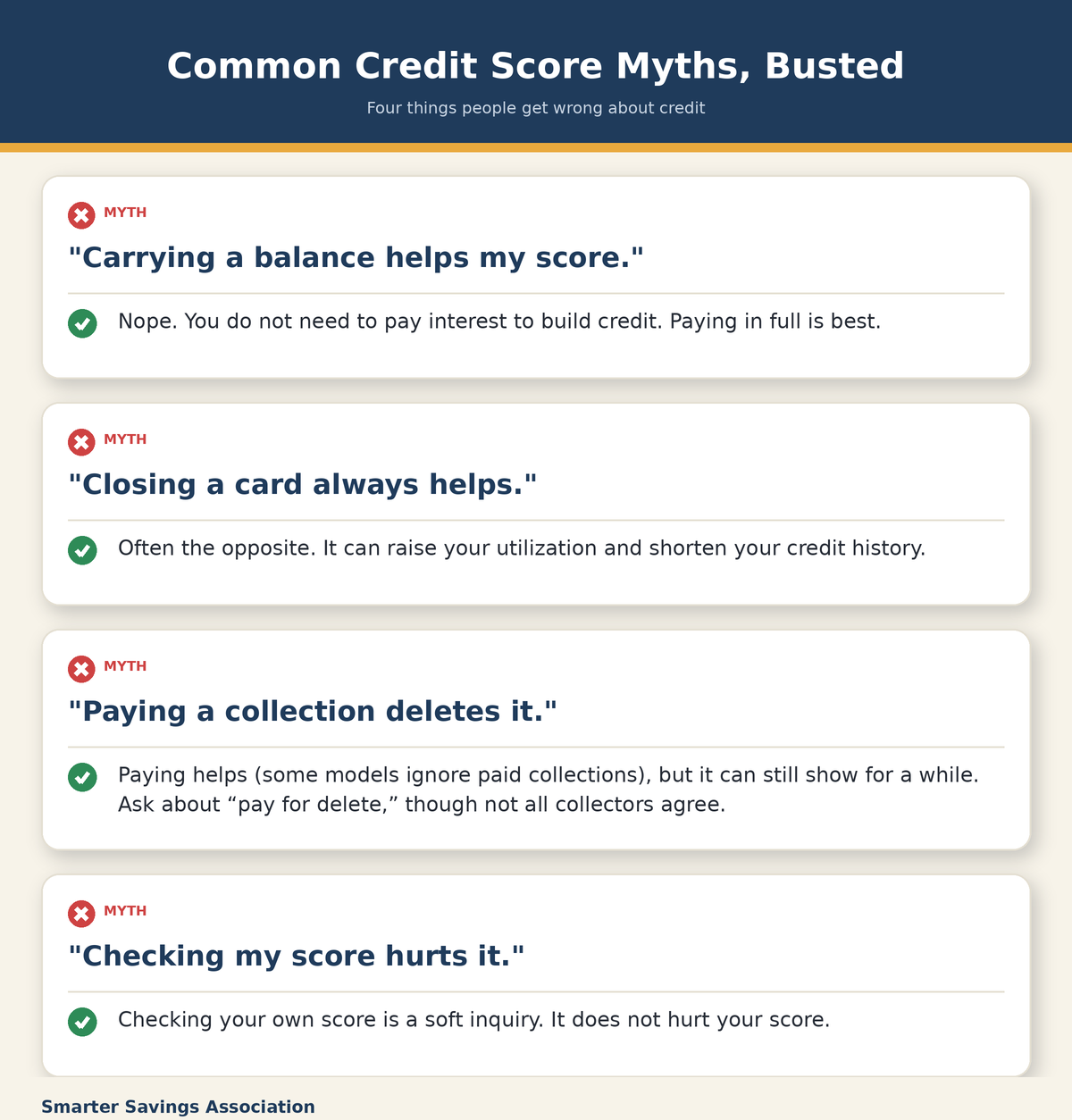
Common credit score myths, busted
Quick wins to build (or rebuild) your score
Never miss a payment. Autopay the minimum + calendar reminders for the rest.
Lower utilization. Pay balances down, pay twice a month, or request a limit increase.
Keep old accounts open (especially fee-free ones).
Space out applications. If you can, wait 3–6 months between new accounts.
Fix errors. Pull your credit reports at AnnualCreditReport.com and dispute mistakes with the bureaus.
Consider a secured card or becoming an authorized user on a family member’s well-managed card (with low utilization and perfect payment history).
Report positive rent/utility payments through a reputable service if your landlord or utility doesn’t report them.
How long do negative marks last?
Late payments: up to 7 years
Collections: up to 7 years (paid collections may be treated more lightly)
Hard inquiries: about 2 years (impact usually fades after a few months)
Bankruptcies:7–10 years depending on chapter
Time and consistently strong habits help your score recover.
Frequently Asked Questions:
-
It can cause a small dip if it reduces your credit mix or the age of active accounts, but being debt-free saves interest and is usually worth it. Scores often stabilize
-
Most creditors report to the bureaus monthly, usually around your statement date. Your score can change each time new data is reported.
-
There’s no magic number, but 740+ often qualifies you for better rates. That said, lenders look at more than just your score.
-
Yes. The account goes on your credit too. If the other person pays late, your score can drop.
A simple action plan for the next 30 days
Today: Turn on autopay and calendar reminders.
This week: Pay cards down to <30% utilization (aim for <10%).
This month: Pull credit reports and dispute errors.
Going forward: Apply for new credit only when needed; keep balances low and payments on time.

