
Budgeting for Homeownership: What to Plan for Before You Buy
Buying a home is one of the biggest financial decisions most people make. While it's exciting to think about picking out paint colors and finally having a yard, the money side of homeownership goes way beyond the down payment and monthly mortgage.
If you've been following our Budgeting Basics series, you already know how to track your spending, sort your expenses, and build a budget that fits your life. Now let's put those skills to work on something specific: preparing for homeownership.
Budget Before You Buy
Before you start browsing listings or attending open houses, take time to build a realistic picture of what homeownership will actually cost. Not just the purchase price, but everything that comes with it.
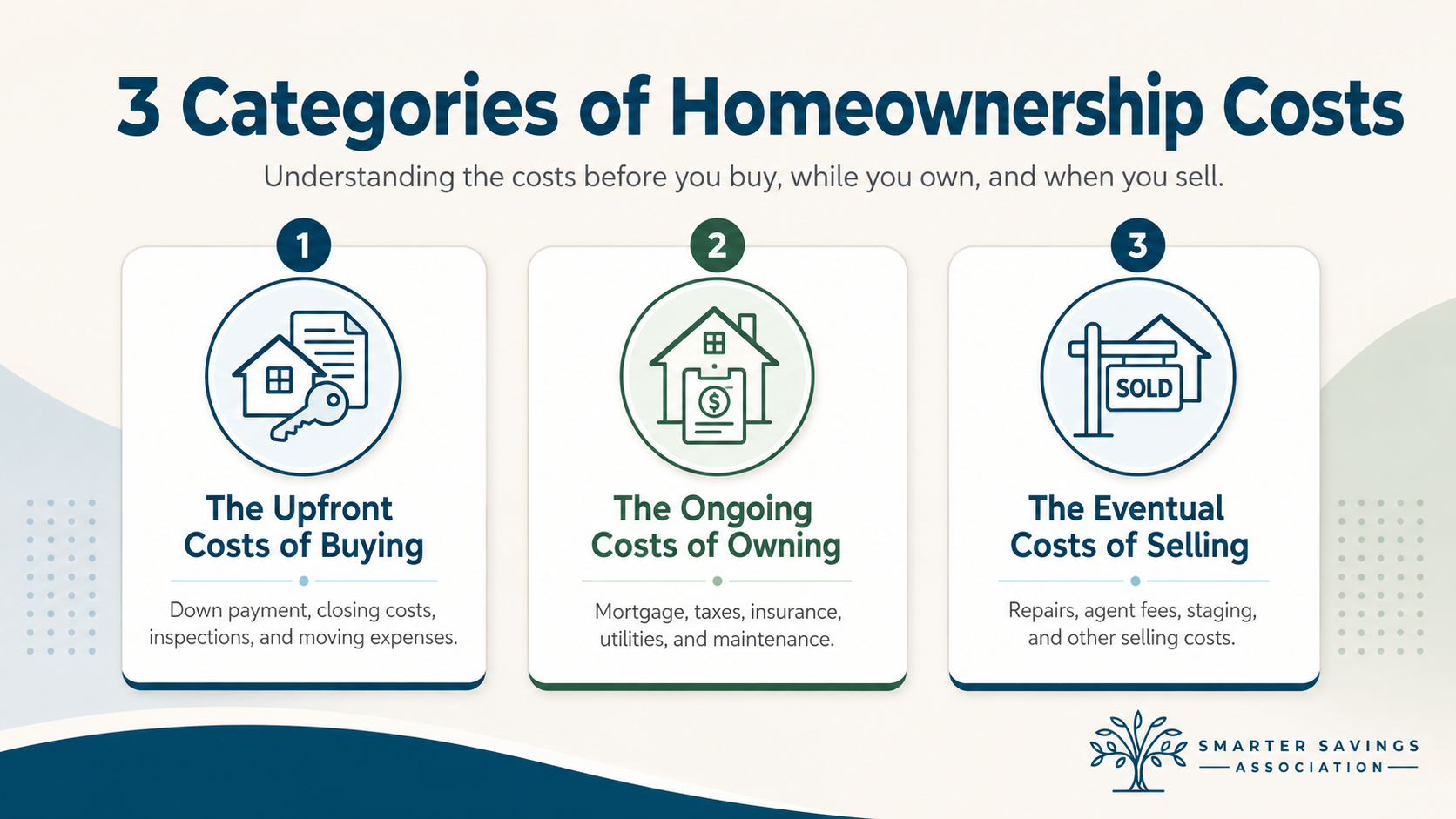
Homeownership costs fall into three categories, let’s break each one down:
1. Upfront Costs: What You'll Pay at the Start
When you buy a home, you'll need more than just the down payment. Here's what to budget for:
Down payment. The cash you pay upfront toward the purchase price. It typically ranges from 3% to 20% depending on your loan type and credit. The more you put down, the lower your monthly payment and the less you'll pay in interest over time.
Closing costs. These cover things like the appraisal, title search, lender fees, and home inspection. Expect to pay 2% to 6% of the purchase price.
First mortgage payment. Your first payment is usually collected at closing, so have at least one month's payment ready.
Escrow funding. If your lender handles your property taxes and insurance through an escrow account, you'll need to fund it upfront, usually two to four months' worth.
Initial repairs or upgrades. Does the home need new appliances, window treatments, or minor fixes? These costs add up fast.
Moving expenses. Don't forget the cost of actually getting into your new place: movers, supplies, deposits, and time off work.
2. Ongoing Costs: What You'll Pay Every Month (and Year)
Your mortgage payment is just one piece of the puzzle. Here's what else to expect:
Mortgage payment. This includes principal and interest. If you put down less than 20%, you may also pay private mortgage insurance (PMI), which protects the lender if you default.
Property taxes. These vary by location but typically run 1% to 3% of your home's value each year.
Homeowner's insurance. Protects against damage from fire, storms, theft, and more. Required by most lenders.
HOA dues. If you buy a condo, townhome, or home in a planned community, you may owe monthly or annual fees to a homeowner's association (HOA).
Maintenance and repairs. This is the one that catches people off guard. Roofs, HVAC systems, appliances, they all wear out eventually. A good rule of thumb: set aside 1% to 2% of your home's value each year for upkeep.
3. Selling Costs: What You'll Pay When You Move On
Even if selling feels far off, it helps to know what's coming:
Closing costs. When you sell, you'll typically pay 6% to 10% of the sale price. This includes real estate agent commissions, title fees, and transfer taxes.
Repairs required to sell. Buyers (or their lenders) may require fixes before the sale goes through, especially for issues like water damage, roof problems, or mold.
Moving expenses. Just like when you bought, you'll need to budget for the move out.
Can You Comfortably Afford It?
Once you add up all three categories, ask yourself: Can I comfortably afford this, not just today, but years from now?
Think about what might change. A new job. A growing family. An unexpected repair. Homeownership works best when there's breathing room in your budget.
If the numbers feel tight, that's useful information. It might mean saving a little longer, adjusting your price range, or waiting until your financial picture shifts.
Your Next Step
Not sure where to start? Download our free Preparing for Homeownership Checklist, a simple way to make sure you've covered the basics before you begin house hunting.
Ready to see the full picture? Our Homeownership Budget Worksheet helps you estimate your upfront costs, monthly expenses, and what you'll need when it's time to sell. It's a simple way to make sure you're prepared before you start house hunting.
Access the online worksheet (SSA members only)
Not a member yet? Join SSA to get access to all of our budgeting tools and worksheets.
