
Prioritize Your Spending: Budgeting Basics
This is Step 3 of our Budgeting Basics series. Start with "Understand What You Spend" (Part 1) and "Wants vs. Needs" (Part 2), then come back here to prioritize your spending.
You've sorted your expenses into fixed, periodic, and variable buckets. You've labeled each one as a want or a need. Now it's time to take the next step: decide what matters most to you.
This isn't about cutting everything fun from your life. It's about making sure your money goes toward the things you actually care about.
Start with Your Values
Before you set any limits, ask yourself: What do I want my money to do for me?
Try thinking through how you want your money to help you with:
Security: knowing you can handle an emergency
Flexibility: being able to take time off or switch jobs.
Experiences: travel, concerts, or meals out with people you love.
Giving Back: supporting causes or people who matter to you.
There’s no wrong answer but knowing your answer making every spending decision easier.
Prioritize Within Your Wants
In Part 2, you sorted your spending into wants and needs. Now let's go deeper on the "wants" side, because not all wants are equal.
Try ranking your wants by asking:
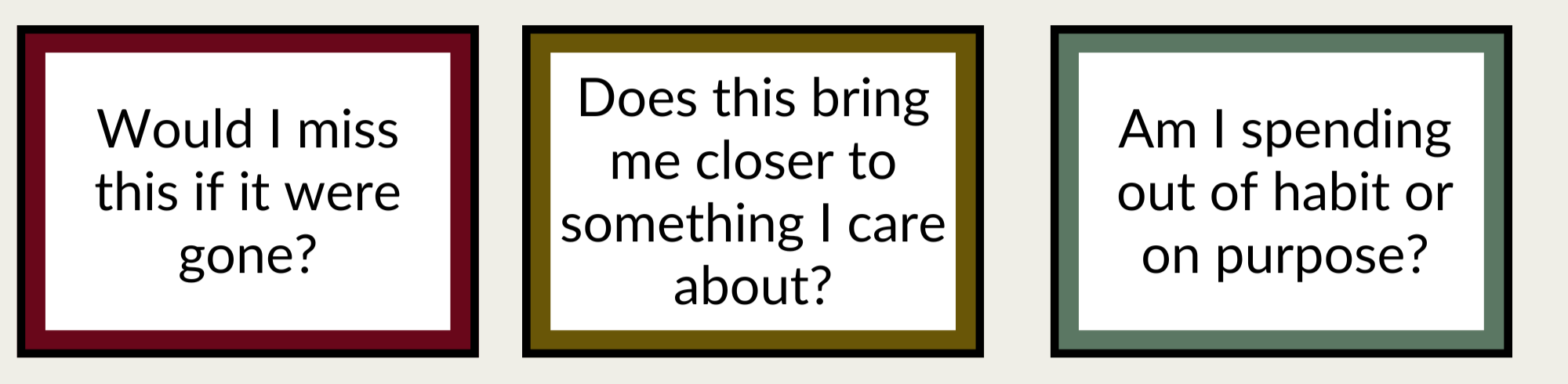
You might discover you're paying for a streaming service you forgot about while wishing you had more money for weekend trips. That's not a failure, that's useful information.
A Simple Prioritization Framework
Once you've reviewed your wants, try sorting them into two groups:
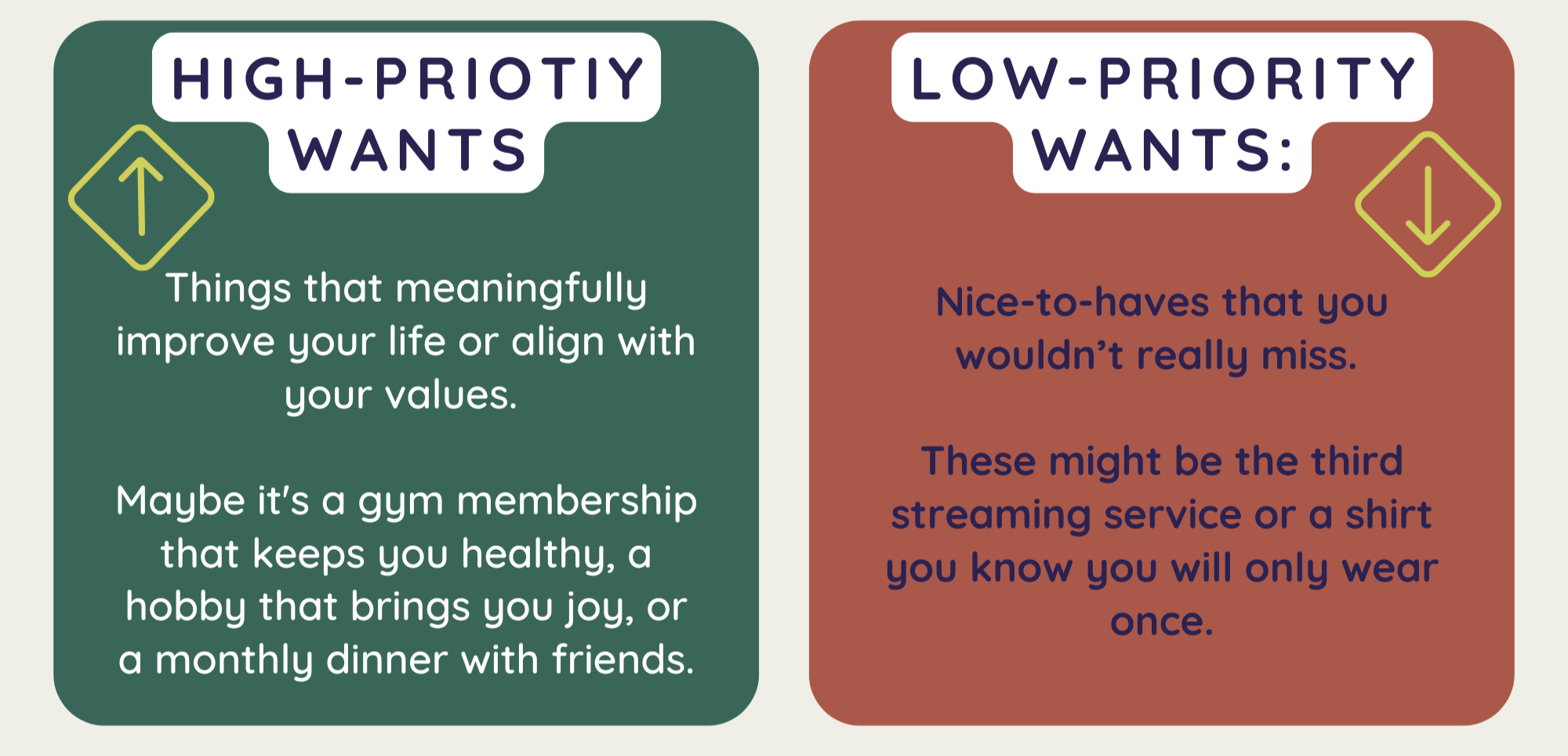
When money is tight, protect your needs first, then your high-priority wants. Cut from low-priority wants.
Build in What Brings You Joy
If a budget feels like constant sacrifice, it's hard to make it stick. Make sure your plan includes spending that's purely for enjoyment, whatever that looks like for you. The key is choosing intentionally. Instead of spending $20 here and $30 there on things you won't remember, you might decide: "I'm putting $100 a month toward experiences with friends, and I'm going to enjoy it."
Your Priorities Will Change
What matters most at 25 might not matter at 35 or 55. A new job, a move, a growing family, your life and priorities will shift, and your budget should shift too. Check in with yourself regularly. Are you still spending on what actually matters? Or are you continuing to spend on the same things over and over out of habit?
Ready to put this into action? Become a member to access our "Prioritize Your Spending" worksheet, where you can rank your wants and build a spending plan that reflects what matters most to you.
Up next in our Budgeting Basics series: Step 4: Budget with a lifestyle in mind.
