
Loan Basics: What You're Actually Agreeing To
Whenever you borrow money, whether it's a credit card, a car loan, or a personal loan, you're really entering into a simple trade:
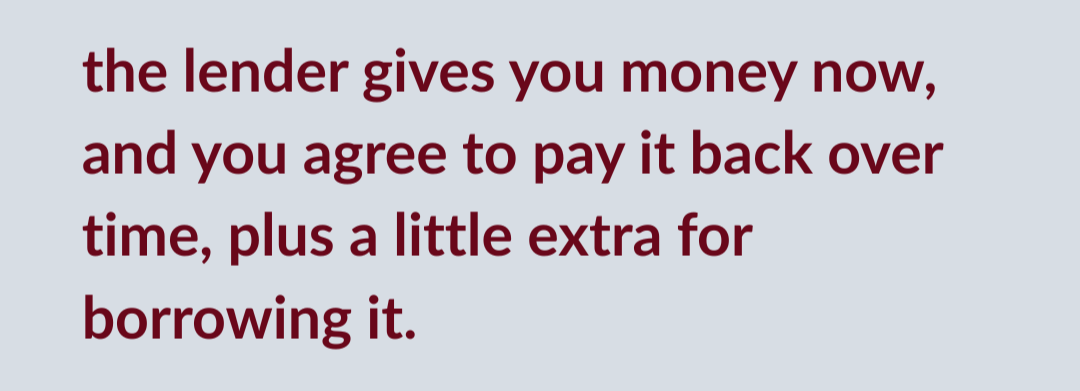
That "extra" is where most of the confusion around loans comes from, so let's break it down piece by piece.
Understanding loan basics and terms
The amount you actually borrowed is called the principal. It's the number you would owe if there were no cost to borrowing money. But there is a cost, and it's called interest: a percentage of what you owe, charged on top of your principal. That percentage is your interest rate, and it's not the same for everyone.
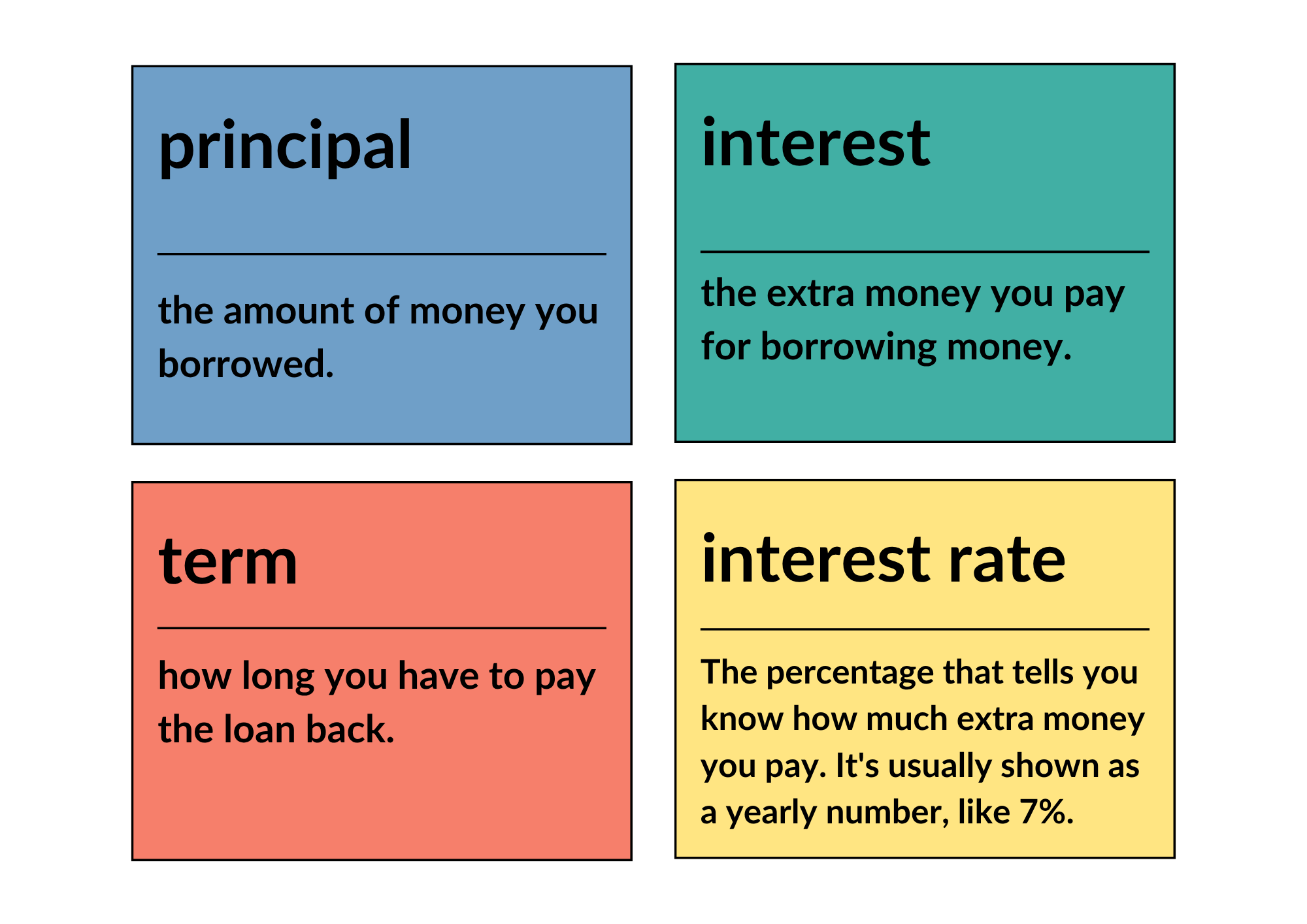
Lenders decide your interest rate by figuring out how likely they think you are to pay them back. They look at things like your credit score and your history with past loans and payments. If lenders think you're less likely to pay it all back, they charge you more interest to make up for that risk. If lenders think you're likely to pay it all back, you usually get a lower rate.
The other important thing to understand is the loan term: how long you have to pay the loan back. Car loans, personal loans, and mortgages usually come with a fixed term (for example: 48 months or 30 years), with a set payment due each month until it's paid off. Credit cards work differently, they have revolving credit, meaning there's no end date built in. Instead, you're required to make at least a minimum payment based on the balance you're carrying that month.
What shapes your loan payment
Four things mostly determine what you'll owe and if you change any one of these, it will change the amount you are paying:
how much money you borrowed (principal)
your interest rate
how often you're required to pay (monthly, quarterly, or something else)
how long you have to pay it back (term)
There are lots of free calculators online that will help you calculate your payment once you plug in your numbers. What matters most is understanding how these four things work together: the longer you take to pay something off, the more total interest you'll end up paying, even if your monthly payment is smaller.
Continue the learning: check out Understanding Loan Interest and How It Adds Up, where we break down how interest actually accumulates over time, the real difference between flat and compounding interest, and why paying down a balance versus letting it sit can add up to hundreds of dollars over the life of a loan.
Unlock more learning from SSA
SSA members have access to our full learning pathways on credit, loans, and debt. Become a member to unlock all resources.
Become a member