
Debt Payoff Strategies: Snowball vs. Avalanche
If you're carrying more than one debt, whether it's a couple of credit cards, a personal loan, or some mix of both, the order you pay them off matters. Two strategies come up again and again: the Avalanche method and the Snowball method. Both work, but they get you there in different ways, and knowing the difference can help you pick the method that you’re most likely to stick to.
The Avalanche method

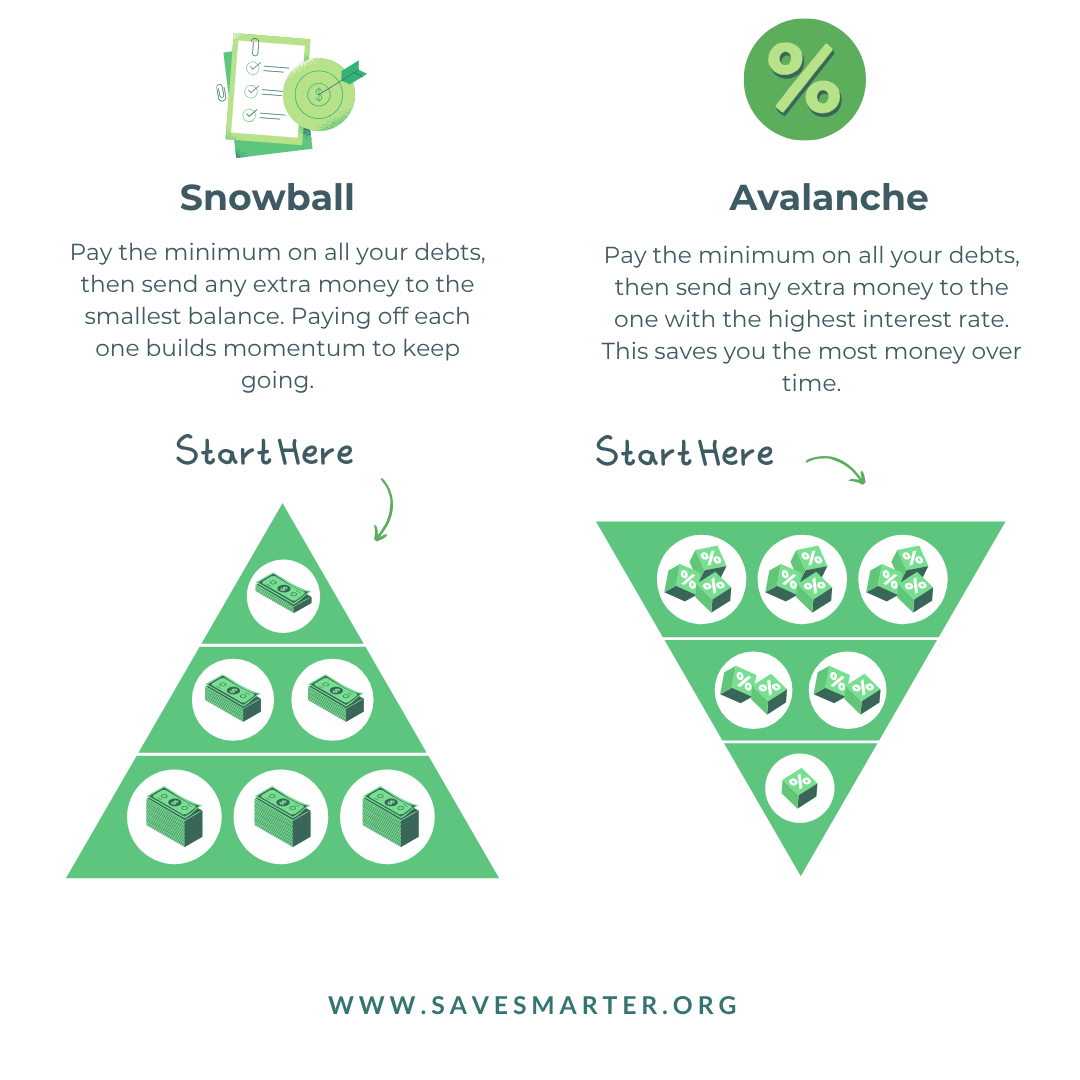
With Avalanche, you tackle your debts in order of interest rate, starting with whichever one is charging you the most. Once that's paid off, you move to the next-highest interest rate and keep going until everything is paid off.
Since you're knocking out your most expensive debt first, this method typically saves you the most money in interest and gets you to zero balance faster than other approaches. Progress can feel slow at first, since the highest-rate debt isn't always the smallest one, but once you clear it, everything after moves faster, like snow picking up speed once it starts sliding down a slope.
Avalanche tends to work best if you're carrying high-interest debt, like credit cards. Of the two methods, it's generally the more cost-effective choice, and it's the one we'd point most people toward if saving money is the priority.
How to implement Avalanche:
Order your debts from the highest interest rate to the lowest.
Keep making at least the minimum payment on every account.
Put whatever extra you can toward the one at the top of the list.
Once it's paid off, move to the next-highest rate, and keep going until every debt is cleared.
The Snowball method
Snowball method also has you pay off debts one at a time, but instead of ranking by interest rate, you rank by balance, smallest to largest.

The payoff here is momentum. Wiping out a small balance early gives you a real, visible win, and that win tends to keep people motivated to stay on track. Each time a debt disappears, the money you were putting toward it rolls into the next one, growing like a snowball picking up more snow as it rolls downhill. The tradeoff is that you'll likely pay more in total interest and it may take longer to be completely debt-free compared to using the Avalanche method
Snowball method tends to suit people juggling several smaller debts who need an early win to stay motivated, or who feel overwhelmed by a long list of open accounts no matter what rate is attached to each one.
How to implement Snowball:
Order your debts from the smallest balance to the largest.
Keep making at least the minimum payment on every account.
Put whatever extra you can toward the smallest balance.
Once it's gone, shift that extra money to the next-smallest balance.
Keep going until every debt is paid off.
Which is right for you
There's no wrong answer here. If saving the most money is your priority and you can stay patient without a quick payoff, Avalanche can be the stronger choice when you run the numbers. If you've struggled to stick with a payoff plan before and need proof that your efforts are working, Snowball's quick wins might be what actually keeps you going. Keep in mind that the best strategy is the one you'll follow through on.
What about other payoff strategies
You may come across other approaches to debt payoff, like consolidation loans, balance transfers, or settlement programs. These can work for the right situation, but they also carry risks and tradeoffs that are easy to underestimate. There's no shortcut that erases a debt problem overnight. Before trying anything beyond Avalanche or Snowball, it's worth building a realistic budget first and thinking carefully about what actually fits your situation, ideally with guidance from a trusted source.
Getting started
Whichever method you choose, start by listing every debt you have: the balance, the interest rate, and the minimum payment. From there, the ranking takes care of itself. SSA members have access to our Debt Payoff Order tool, which does that ranking for you instantly. Enter your numbers and see both methods laid out side by side.
And if any of those balances or rates are higher than you expected, it's worth checking your credit report to understand what's shaping the terms you've been offered in the first place.

