Loans & Debt
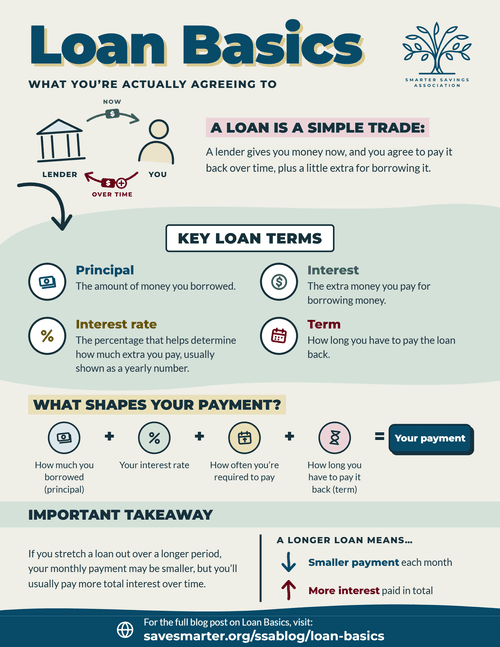
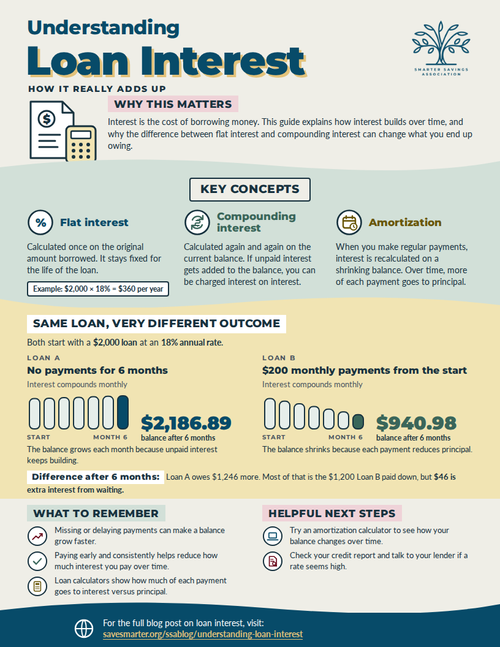
Loans and debt touch nearly every part of your financial life, from the interest rate on a car loan to your credit card balance. This pathway breaks down how borrowing actually works, what you're really agreeing to when you take out a loan, and practical strategies for tackling debt you're already carrying.
Learn the basics
Start with whatever fits where you are right now.



Try the tools
Put what you learned to work with your own numbers. Open a tool to get started.
Find Your Payoff Order
Add what you owe and see two smart orders to pay it off: Snowball or Avalanche.

Free member tool
Find your payoff order
Add what you owe below, and we'll show you two smart orders to pay it off. Pick the one that fits how you think about money.
Snowball vs. Avalanche: what's the difference?
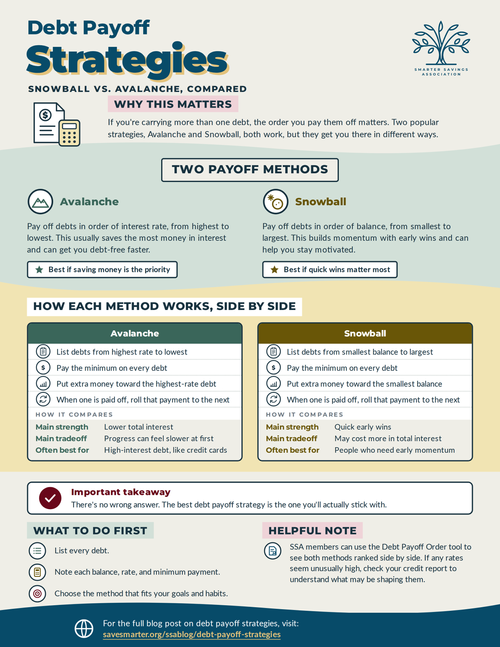
Snowball pays off your smallest balance first. It's about momentum: quick wins keep you motivated to keep going. Avalanche pays off your highest interest rate first. It's the most efficient path mathematically, since it usually saves you the most in interest over time. Neither one is wrong, pick the one you're more likely to stick with.
Add at least one debt above to see your plan.
Snowball
Smallest balance first
Avalanche
Highest rate first
See What an Extra Payment Can Do
Add your loan details and an extra monthly amount to see the time and interest you could save.
Free member tool
See what an extra payment can do
Add your loan details below, then add an extra amount you could put toward it each month. We'll show you the time and interest that adds up to.
Why does a small extra payment matter?
Extra payments go straight toward your principal instead of interest. That shrinks the balance interest gets charged on every month after, so even an extra $25 or $50 a month can add up to real time and money saved.
That payment doesn't cover the monthly interest, so the balance would never pay off. Try a higher payment amount.
Current payment
With extra payment
Results are estimates for planning purposes only. Actual payoff time and interest may vary based on your lender's calculation method, fees, and how interest accrues on your account.
Take it with you
Printable guides to keep, share, or use offline.